

Report: Attendance Trends
What this screen is for
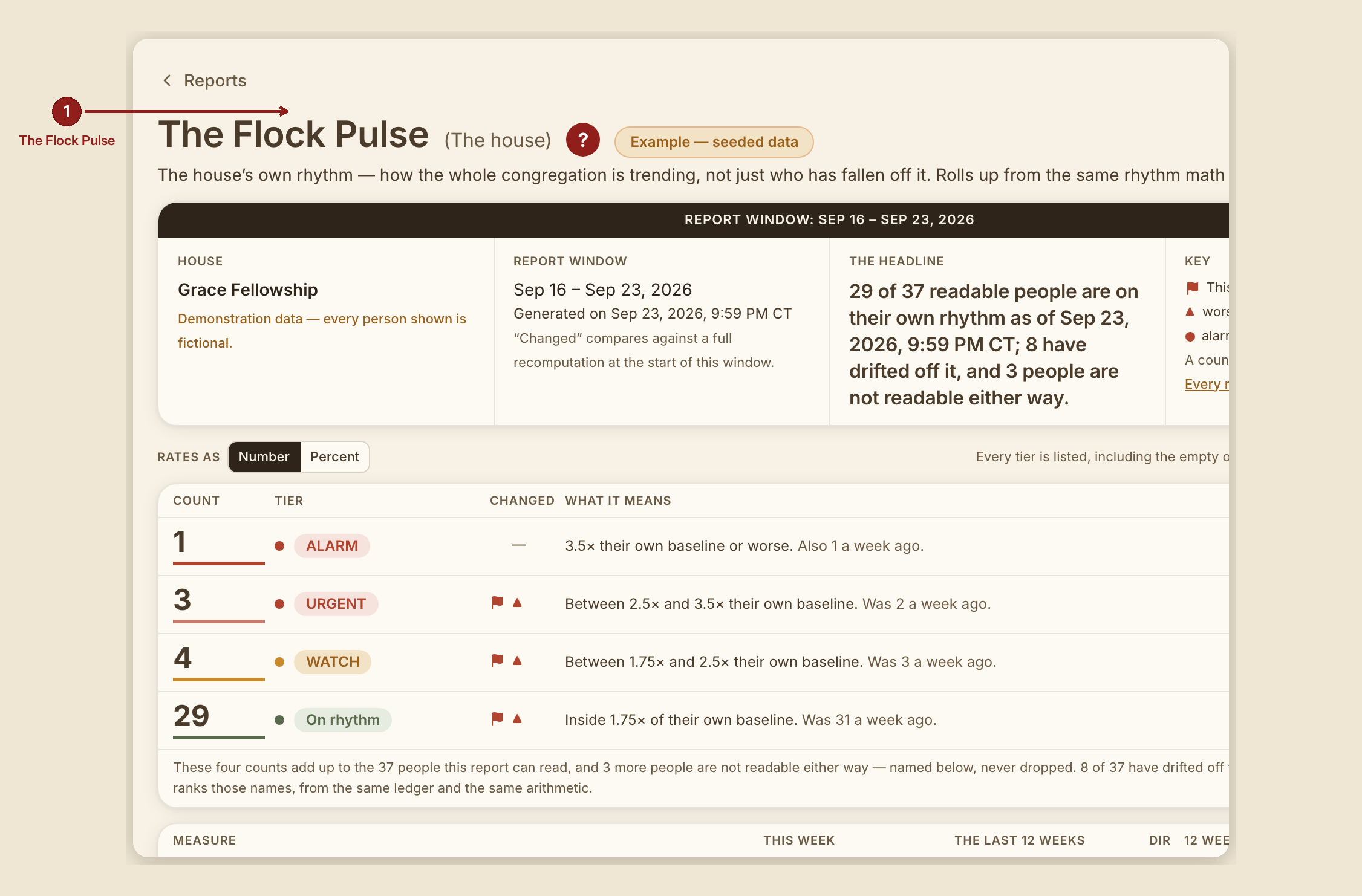
Attendance Trends (/dashboard/reports/flock-pulse) reads the house's own rhythm as a whole — how the whole congregation is trending, not just who individually has fallen off, as Return Invite Follow-Up does. The two reports share the same rhythm math on purpose, so they never disagree about the same person.
What you see, in the screen's own labels
- H1 "Attendance Trends." (RUN 192 dropped the parenthetical "(The house)" subtitle.)
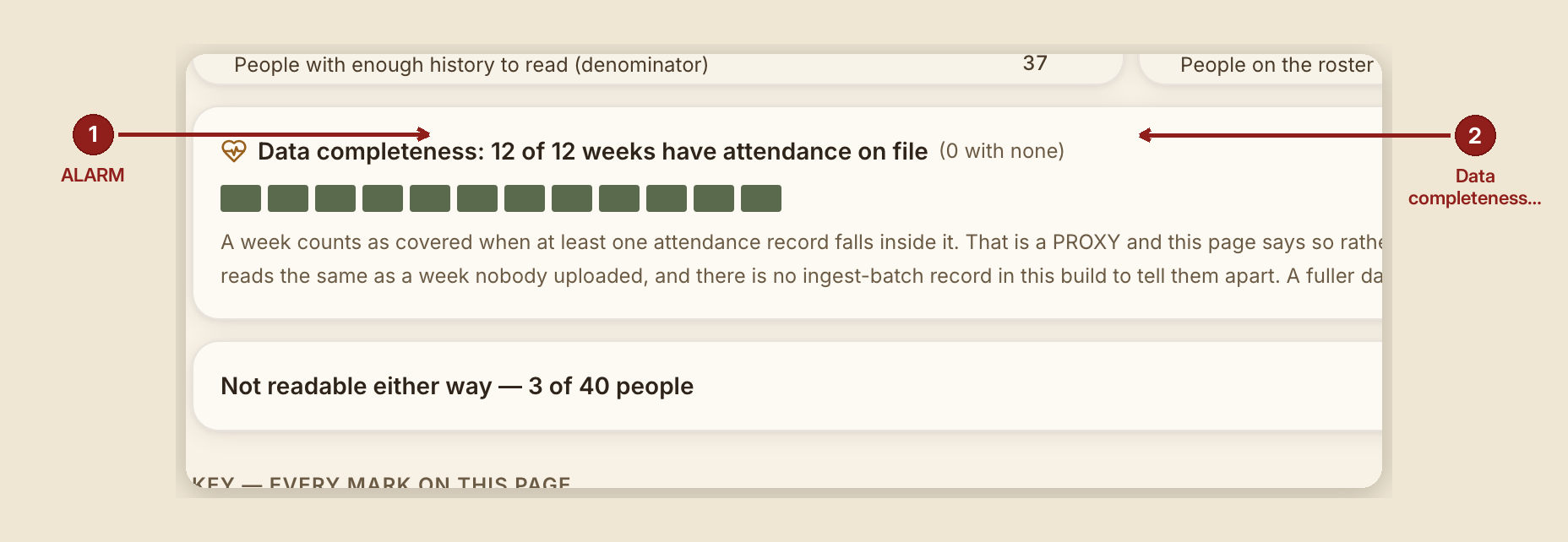
- No scorecard strip. This report's own design note is explicit: the group table IS the scorecard. Four group rows — Away much longer than usual, Away longer than usual, Starting to miss, On rhythm — carry the tile treatment instead.
- Group row columns: Count · Group · Changed · What it means.
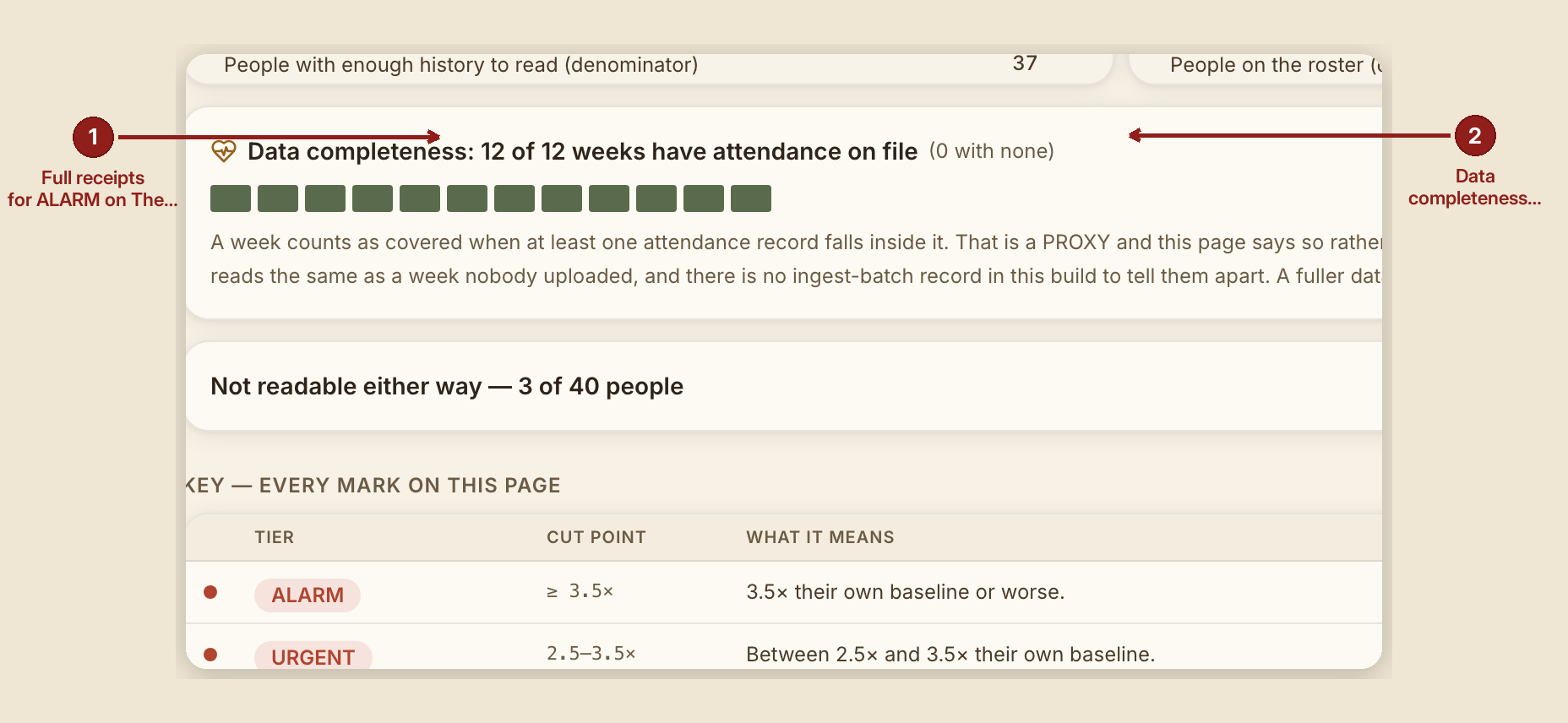
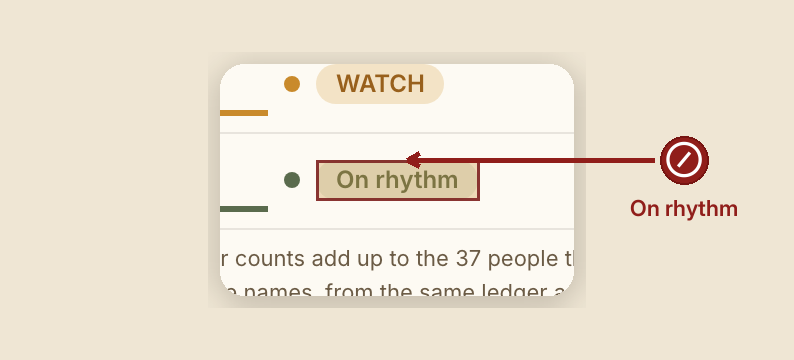
- Tier descriptions, written directly from the same thresholds Return Invite Follow-Up uses: - Away much longer than usual: "Away 3½ times longer than their usual time between visits, or more." - Away longer than usual: "Away between 2½ and 3½ times longer than their usual time between visits." - Starting to miss: "Away between 1¾ and 2½ times longer than their usual time between visits." - On rhythm: "Inside 1.75× of their own baseline."
- "Data completeness: {n} of {total} weeks have attendance on file" — a chiclet strip, explicitly flagged in its own Key entry as a proxy measure, not a true reading of attendance.
What to do
- Read this report for the shape of the whole house, and drop to Return Invite Follow-Up when you want the individual names behind a group.
- Watch the data-completeness strip as a sanity check on the numbers above it — a house with several blank weeks should read its group counts with that gap in mind.
What NOT to do
- Don't read this report as a scorecard on congregation health in the abstract. It measures attendance rhythm specifically, against each person's own baseline — not spiritual health, not engagement in a broader sense.
- Don't expect a sparkline or ranking here. By design, this report is the group counts only; individual ranking lives on Return Invite Follow-Up.
When something goes wrong
- Nobody's on the roster yet: "Nobody is on the roster yet, so there is no house rhythm to read."
- Nobody has two attendance records yet to read a rhythm from: "Nobody on the roster has two attendance records yet, so as of {date} there is no rhythm to read — that is a gap in the attendance record, not a healthy house."
- Everyone's on their own rhythm: "The whole house is on its own rhythm — as of {date}, all {n} people with enough history to read are inside their usual gap."
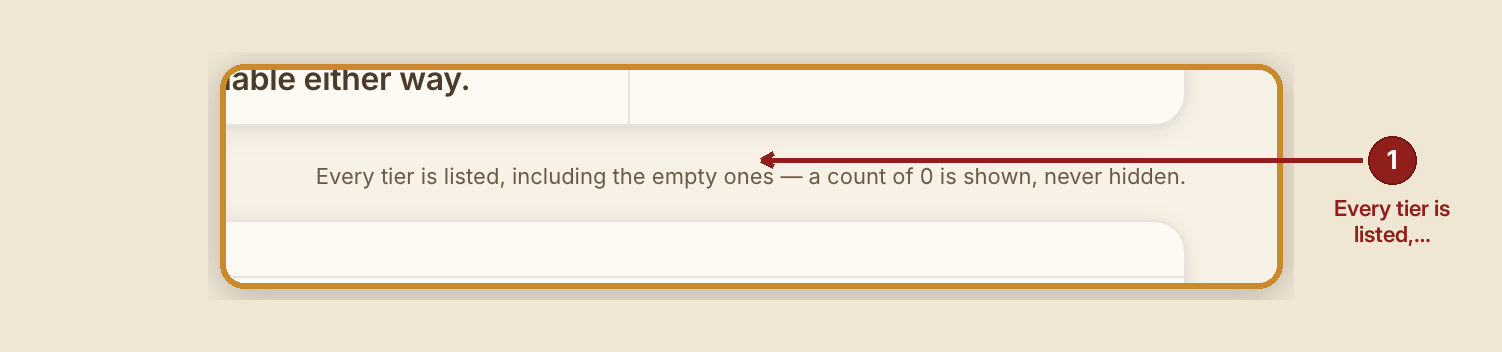
- Nobody has drifted: "0 of {n} readable people have drifted off their own rhythm as of {date} — that is not a bug. The Starting to miss, Away longer than usual and Away much longer than usual rows above are still listed, at zero."